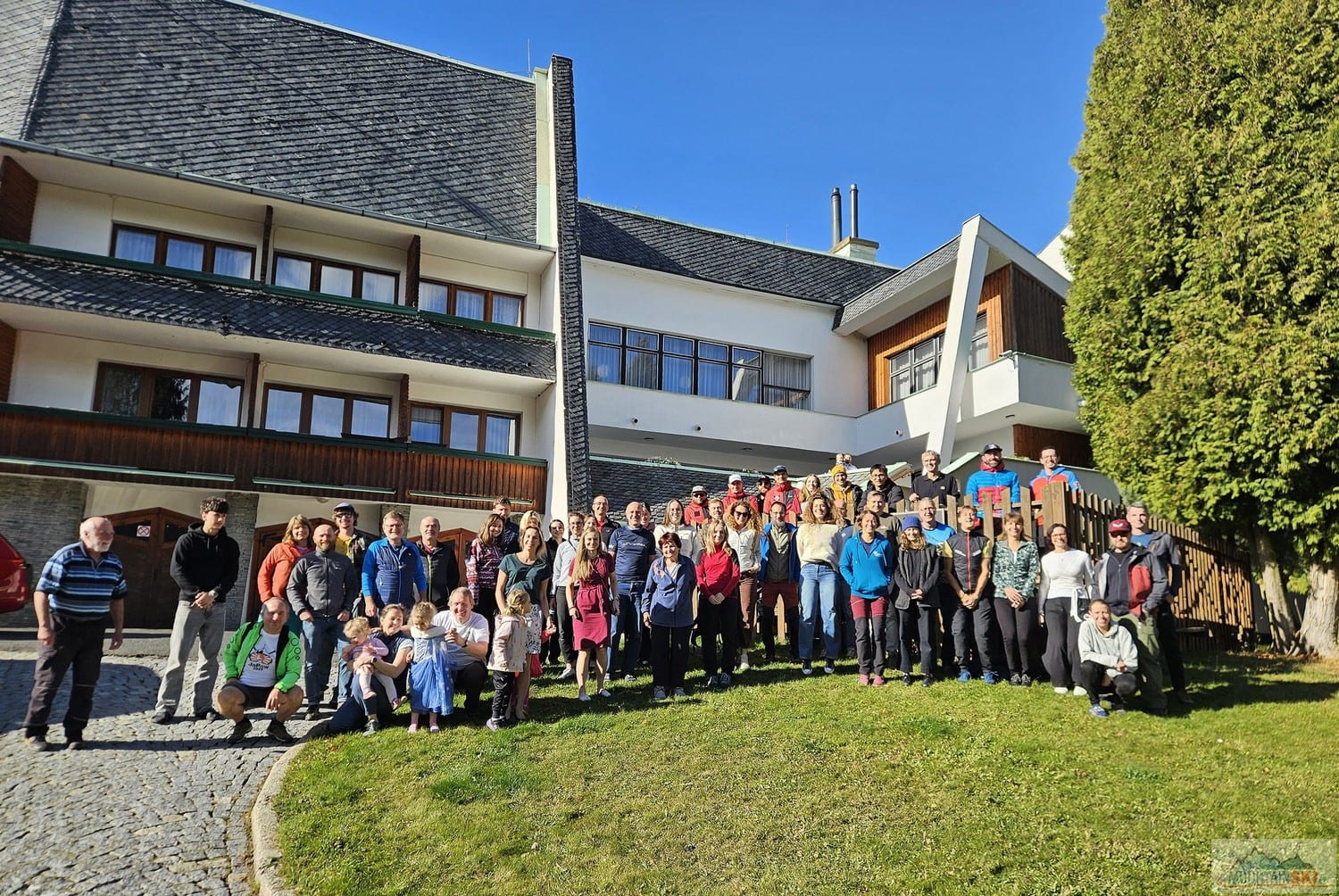
The organizers from the Mountain Medicine Society prepared an extensive program of lectures and workshops covering topics such as AMS, HAPE, HACE, frostbite, lightning strikes, a variety of compelling case studies, trauma, expeditions to 8,000-meter peaks, and many other subjects. Medical students and rescue personnel were particularly well-represented this year. Notable contributions came from professional rescue services, including the Jeseníky Mountain Rescue Service (HS Jeseníky) and three representatives from the Mountain Rescue Service (HZS) of the High and Low Tatras.
Saturday afternoon featured three main workshops: the practical use of a Gamow bag (led by Jana Kubalová), equipment for 8,000-meter peaks (Mária Hundža Stratilová), and rope techniques for self-rescue (Petr "Hřib" Adámek). A detailed summary of this year’s Pelikán Mountain Medicine Seminar, including a collection of the lectures, will be available on the website horska-medicina.cz.
On Saturday, the Mountain Medicine Society also held its General Assembly, followed by an Executive Committee meeting. During these sessions, tasks and priorities for the coming year were defined, including the dates for the 37th Pelikán Mountain Medicine Seminar, which will take place from the 12th to the 14th. November 2027.
Key Takeaways from the Pelikán Seminar
Prevention is better than improvisation
Plan your route, monitor the weather, know the group’s capabilities, establish criteria for turning back, and have a contingency plan.
Time determines treatment outcomes
Especially in cases of frostbite, hypothermia, polytrauma, and other serious medical conditions, rapid recognition of the problem and proper first aid are crucial.Communication and teamwork save lives
Clearly assign tasks, share information, coordinate rescue efforts, and regularly practice for crisis situations.
Gear alone is not enough
You must know how to use your equipment, train regularly, and recognize when conditions exceed your capabilities.
Making the right decision might mean turning back rather than reaching the summit
Physical fitness, experience, and ambition offer no protection against altitude sickness, bad weather, or accidents. You must continuously re-evaluate the situation.
We must learn from our mistakes
Analyzing real-life accidents and practicing realistic scenarios helps translate knowledge into practical application.